

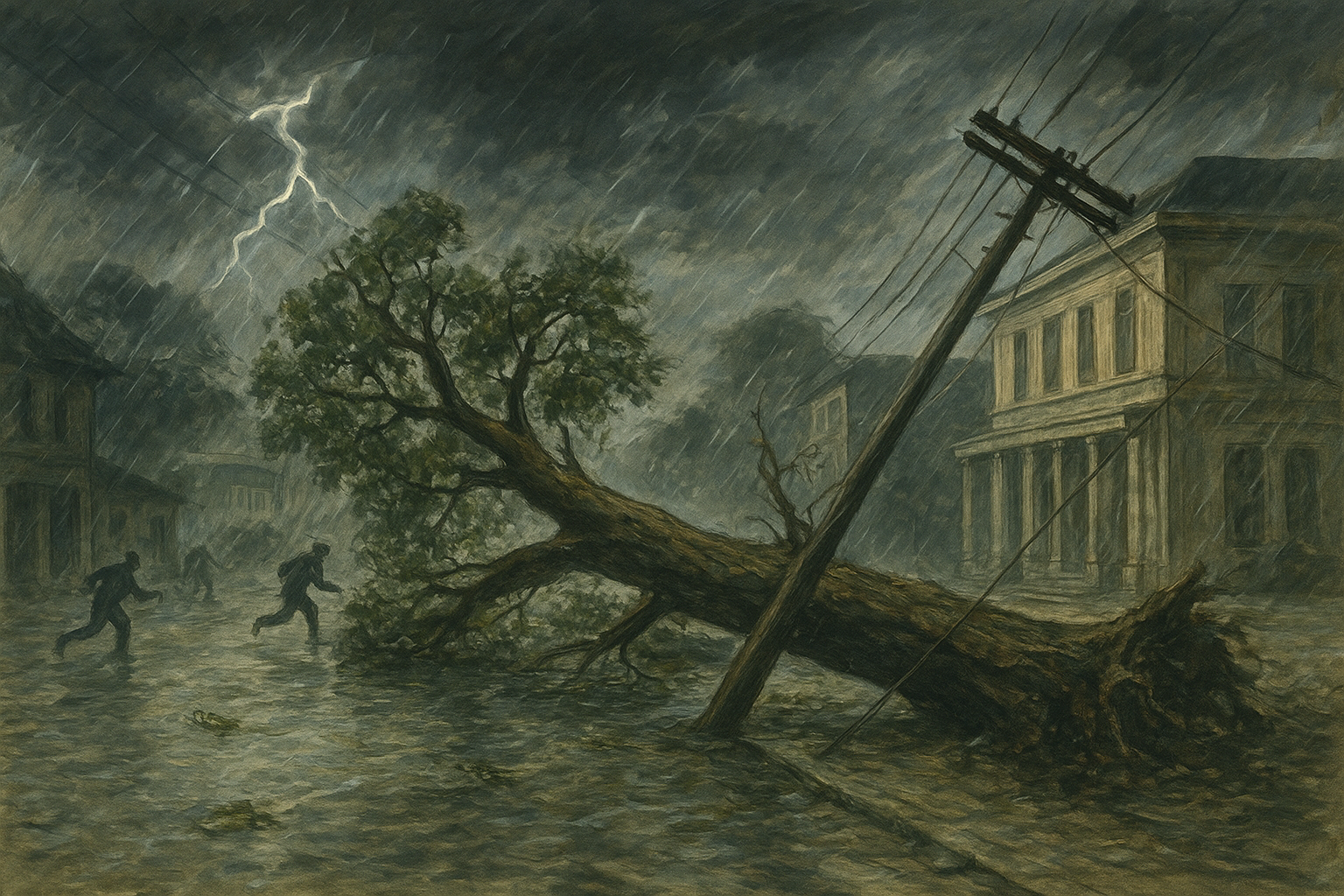
The Bandung Basin is never truly free from the threat of natural disasters. This highland region is frequently battered by rainstorms, struck by lightning, and even struck by tornadoes. These disasters not only cause material losses but also loss of life. One of the largest storms ever recorded in Bandung’s history occurred on January 25, 1922. The initially clear sky suddenly darkened, and from 3:00 p.m., torrential rain fell, accompanied by lightning and strong winds. De Indische Courant described the event as a devastating storm of unprecedented magnitude[1].
Previously, Bandung had experienced similar events every year. Rivers overflowed with incredible force, sweeping away banana trees, submerging villages, blocking main roads, and filling basements and warehouses with murky, muddy water. But that storm was extraordinary. In just two hours, it transformed tranquil Bandung into a city of chaos[2].
Read Also: THE SECOND STORM OF BANDUNG, 1922
Another newspaper, De Preangerbode[3], vividly described the event. Founded in 1896, the paper wrote, “The rain fell in torrents, thunder and lightning flashed incessantly, while a whirlwind hurled water from the sky.”
The heavy rainfall inundated Bandung. Several roads turned into rivers, and waterways overflowed far above normal levels. Ironically, the De Preangerbode office, which was reporting on the disaster that day, was one of the buildings worst affected. Water flooded Jalan Raya Pos and then entered the office and the underground printing rooms. Water flooded the typesetting, printing, binding, and distribution areas. Meanwhile, books were damaged and furniture destroyed by the flood. Employees’ rush to continue working and salvaging inventory meant the evening edition of the newspaper was later than usual[4].
The damage wasn’t limited to the De Preangerbode newspaper office. The storm also damaged offices along Jalan Raya Pos (now Jalan Asia Afrika). At the same time, the new Societeit Concordia building suffered a severe leak. Nearby, a large tree branch snapped and fell.
The Technisch Bureau Soenda office, located where the current PLN office is, also suffered severe damage. Water seeped in, even causing archives to float. This office suffered losses of 12,000 to 13,000 guilders[5].
Vendors in Pasar Baru also suffered losses of thousands of guilders. The strong currents of water surged through streets and homes, sweeping away all kinds of goods found in the market. Not far from the market, on Suniaraja Street, the water channel could not accommodate the large volume of water[6].
The storm brought not only flooding but also strong winds that caused damage in many areas. Many trees were uprooted, including those near the station, Tegallega, Rumah Sakit Lama Street, Residen Street, Jalan Raya Pos, Nias Street, and many other locations. The winds also cut telephone cables. The strong winds resulted in two fatalities, both of whom were struck by falling trees. Elsewhere, a victim suffered a broken leg and required treatment at Cilentah Hospital[7].
A fatality also occurred when the rear of the Orion cinema building on Kebonjati Street collapsed. Unable to withstand the winds, the cinema collapsed within seconds. The collapsed structure buried several people taking shelter inside. Five people were rescued, while a 9-year-old child was swept into the overflowing river and found dead[8].
Read Also: STRONG WINDS AT CIPARAY MARKET
A leak also occurred at the Gemeente-secretarie building on Aceh Street, Bandung. Water dripped from the roof onto the meeting table, soaking official documents and agendas, and flooding the council meeting room. After entering the room, the council chairman suggested that council members tour the city to observe the storm’s impact[9].
Two hours later, the storm finally subsided, and a rainbow appeared clearly in the twilight sky. By nightfall, calm had returned. The events of the two-hour storm became the talk of the town. The storm of January 25, 1922, was one of the most devastating weather events in Bandung’s history, leaving a trail of extensive damage and deep memories for its residents.
References:
[1] Noodweer. De Indische Courant. Edisi 26 Januari 1922.
[2] Noodweer in Bandoeng. De Indische Courant. Edisi 27 Januari 1922.
[3] Noodweer. De Preangerbode. Edisi 26 Januari 1922.
[4] Noodweer. De Preangerbode. Edisi 26 Januari 1922.
[5] Noodweer. De Preangerbode. Edisi 26 Januari 1922.
[6] Noodweer te Bandoeng. Bataviaasch Nieuwsblad. Edisi 26 Januari 1922.
[7] Noodweer te Bandoeng. Bataviaasch Nieuwsblad. Edisi 26 Januari 1922.
[8] Noodweer te Bandoeng. Bataviaasch Nieuwsblad. Edisi 26 Januari 1922.
[9] Noodweer in Bandoeng. De Indische Courant. Edisi 27 Januari 1922.

Leave a Reply