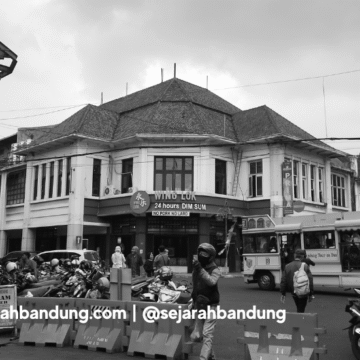
On September 18, 1921, the atmosphere along Dago Street in Bandung was lively. Cars arrived one after another at a building numbered 80[1], dropping off guests who had come to attend an important reception. The terrace of the building was filled with flower arrangements of various shapes and colors[2]. That day, the city of Bandung...
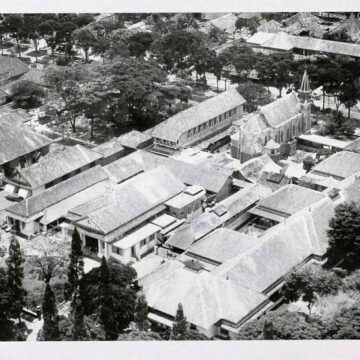
Category: Tangible Heritage
WHEN THE TORNADO STRUCK CIUMBULEUIT
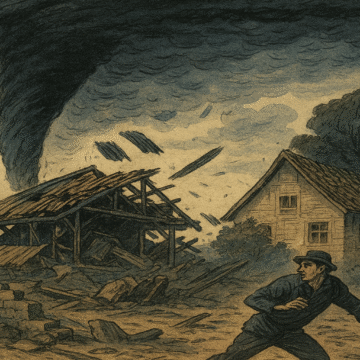
A tornado struck Ciumbuleuit, about four paal (about 6 km) from Bandung city center, on 26 February 1913 at around four o’clock in the afternoon. According to the first report in the newspaper De Preangerbode, the tornado destroyed part of the nearby tea factory building and the administrator’s house[1]. The Ciumbuleuit plantation was located in...
THE FIRST VIADUCT IN BANDUNG
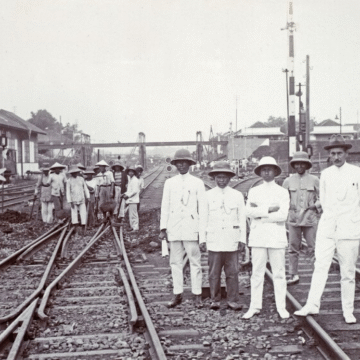
To the west of Bandung Station, a bridge spans the railway line. This approximately 50-meter-long bridge connects the south and north sides of Pasirkaliki Street. It became a crucial element in Bandung’s modern urban planning. The bridge’s existence was closely linked to the railway network improvement project in Bandung in the 1920s. At that time,...
STORY OF THE NEW SUNIARAJA STREET
Suniaraja is one of the oldest roads in downtown Bandung. In the early 20th century, it served as a vital link between Bragaweg and Pasarbaru, as well as Bandung Station. However, before urban planning improvements, the route to Braga from Pasarbaru was not as straight as it is today. From Pasarbaru, one had to travel...
TREASURE IN GEDUNG SATE
In the 1920s, the Dutch East Indies government built Gedung Sate in Bandung. The building served as the office for the Department Verkeer en Waterstaat (Department of Public Works and Water Management). Originally, it was part of the government office complex known as Gouvernements Bedrijven. Inside the building, constructed between 1920 and 1924, the government...