

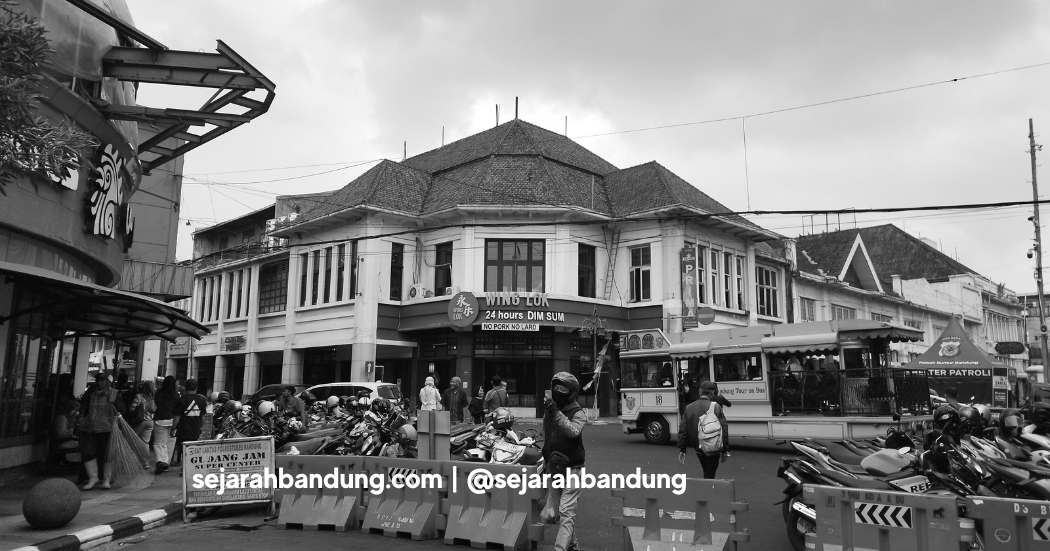
Suniaraja is one of the oldest roads in downtown Bandung. In the early 20th century, it served as a vital link between Bragaweg and Pasarbaru, as well as Bandung Station. However, before urban planning improvements, the route to Braga from Pasarbaru was not as straight as it is today.
From Pasarbaru, one had to travel via Suniarajaweg and Landraadweg, crossing the railroad tracks and a bridge over the Ci Kapundung River. From the Logeweg intersection (now Jalan Wastukencana), the journey turned south and crossed the railroad tracks again next to the Java Veem Warehouse. It finally reached the intersection of Bragaweg and Oud Hospitaalweg (now Jalan Lembong).
The journey felt long and circuitous, not to mention risky, as it had to cross two railroad tracks. This situation prompted the Bandung City government to design a new connecting route directly connecting Suniaraja Road and Braga Road.
In addition to shortening the distance, this project was expected to significantly reduce traffic congestion on the Landraadweg. The city government believes this project will be a crucial step for the future of Bandung’s transportation system[1].
Construction of this new road begins at Gang Affandi. It was a narrow alley located next to the Naessens Firm building, across from the mouth of the Oud Hospitaalweg. Beyond the village where the alley ends, a vast open field stretches to the banks of the Ci Kapundung River[2].
In the city plan, Gang Affandi was to be extended through the small village and across the field. It was then to continue across the river, ending at Suniarajaweg, right at a location known at the time as a taxi stand. The new road was designed to be 18 meters long, wide enough to accommodate the city’s increasingly dense traffic[3].
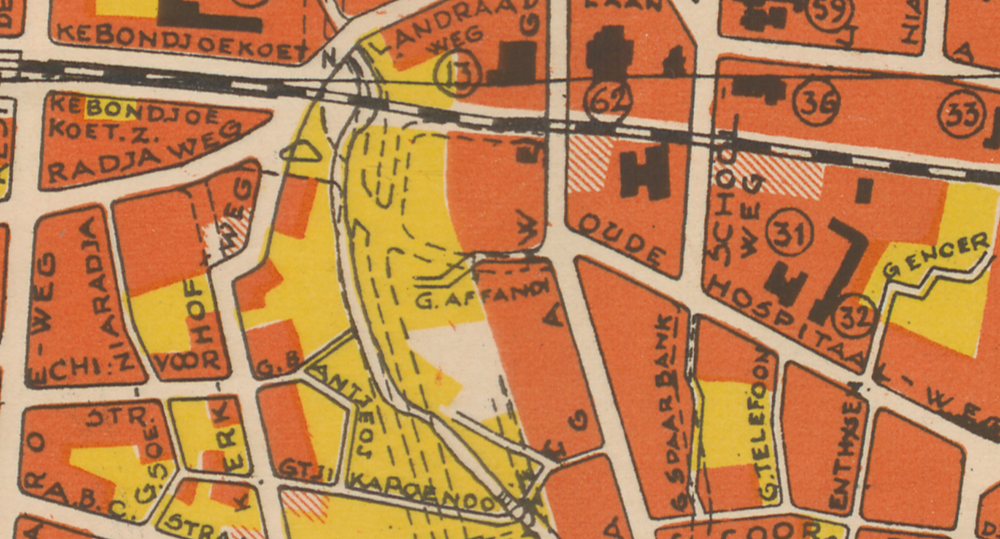
From the beginning, this project was included in the official planning of the Dutch East Indies government. The government provided a subsidy of 98,000 guilders for the Gang Affandi road project, based on Government Decree No. 11 of March 31, 1930.
However, the technical plan for the Cikapundung Bridge, a crucial part of the project, had not yet been submitted. This prevented a technical assessment from taking place. As a result, the temporary budget of approximately 37,000 guilders for the bridge was removed from the budget list[4].
This plan did not stand alone; it ran alongside another major project: the construction of a boulevard connecting the Landraadweg with the Grote Postweg[5]. This boulevard is known as Cikapundung Boulevard, as written by Haryoto Kunto in his book[6].
However, the difficult economic conditions of the early 1930s changed everything. In August 1932, the colonial government announced that the promised subsidies would not be released. They explained that spending had to be cut due to the global recession. As a result, the plan to build a direct road connecting Oud Hospitaalweg and Suniarajaweg was postponed indefinitely[7].
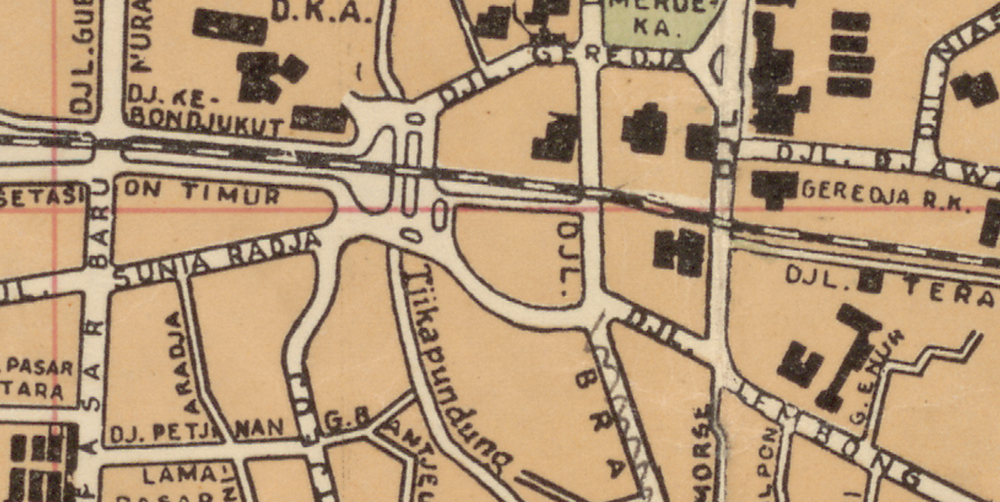
After nearly a decade of delays, the road’s construction finally neared completion in 1940. Its completion had significant social impacts. As noted above, this bypass road passed through the Affandi Alley neighborhood. The existence of this road opened up views of previously hidden villages.
A writer for the newspaper Het Nieuws van den Dag deeply regretted this. Some European residents of Bandung considered the sight of the roadside villages a blight on the city’s beauty. The writer was convinced that these villages would be removed[8].
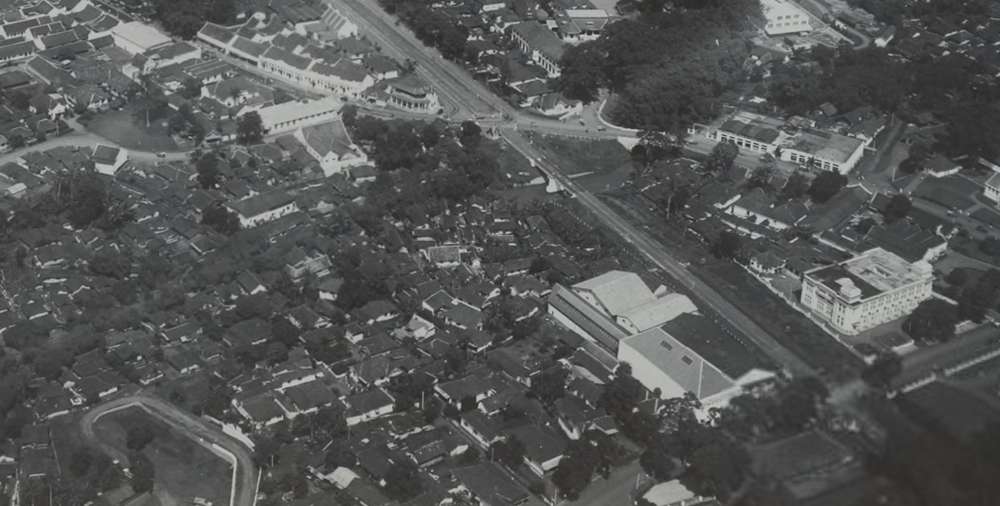
The writer’s conviction came from an article in the “Brieven van de Hoogvlakte” (Letters from the Highlands) column of the Onze Courant newspaper, which argued that areas detracting from the city’s scenery should be removed immediately. The article described the ramshackle shacks behind Braga as an unsightly sight[9]. Gradually, the houses around the newly built Suniarajaweg were demolished and replaced with new buildings.
References:
[1] Twee Doorbraken. Het Nieuws van den Dag. Edisi 8 Maret 1939.
[2] Twee Doorbraken. Het Nieuws van den Dag. Edisi 8 Maret 1939.
[3] Twee Doorbraken. Het Nieuws van den Dag. Edisi 8 Maret 1939.
[4] Gemeente Bandoeng. De Koerier. Edisi 31 Juli 1931.
[5] Gemeente Bandoeng. De Koerier. Edisi 31 Juli 1931.
[6] Kunto, Haryoto. 1986. Semerbak Bunga di Bandung Raya. Bandung: PT. Granesia. Halaman 812-814.
[7] Bezuiniging in Bandoeng. Het Nieuws van den Dag. Edisi 5 Agustus 1932.
[8] De Stadskampongs. Het Nieuws van den Dag. Edisi Het Nieuws van den Dag.
[9] De Stadskampongs. Het Nieuws van den Dag. Edisi Het Nieuws van den Dag.

Leave a Reply