

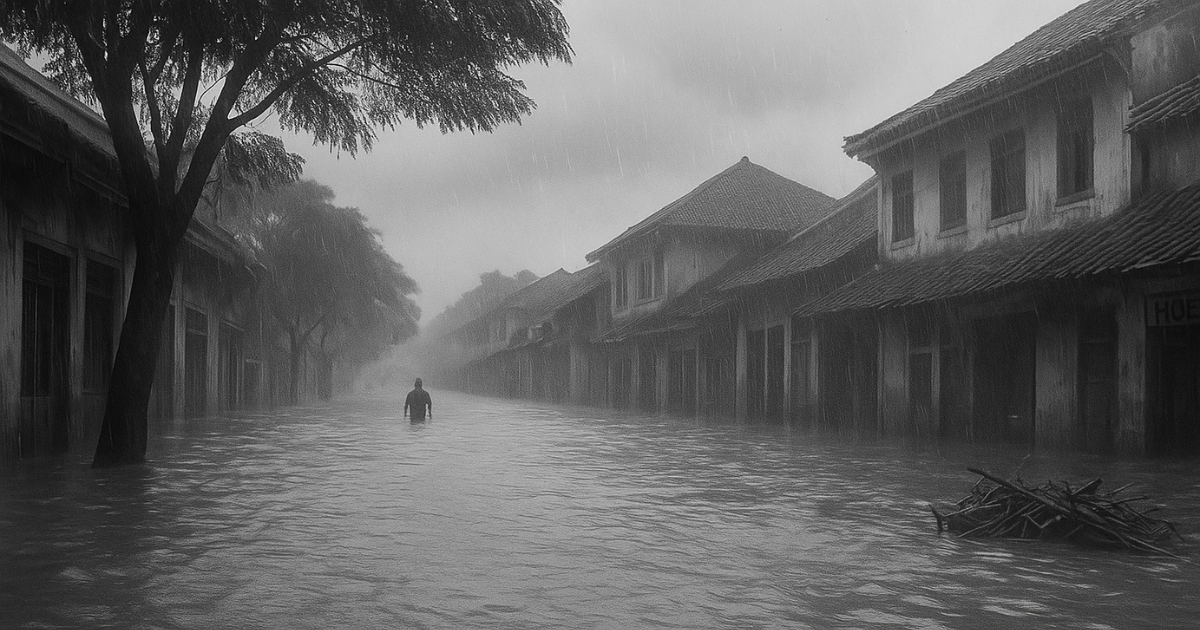
Just four days after the first storm, Bandung was hit again in early 1922. The first storm, on Wednesday, January 25, caused chaos across the city: floods spread, trees fell, roofs leaked, and several buildings collapsed, even causing casualties. Another storm struck with lightning on Sunday, January 29, as residents repaired the damage and tried to return to normal.
That Sunday began with relatively sunny weather. However, as the day progressed, the skies darkened once more, leading to another major storm. According to a report in the January 30, 1922, edition of De Preangerbode, this storm was just as devastating as the previous one. Heavy rain caused rivers and drains to overflow, submerging vast areas and causing extensive damage.
Read Also: STRONG WINDS AT CIPARAY MARKET
In the Cicendo area, the floodwaters were so severe that they affected residents, with some even placing their children on tables to protect themselves from the water. A resident reported that their furniture was badly damaged, their chickens were swept away, and their beds were soaked. The flooding caused an estimated 250 guilders in damage. The inundation of the Cicendo area in the north of the city led reporters to believe that the Chinese neighborhood in the south would also experience similar consequences.
Meanwhile, Pangarang Village also faced significant flooding, a recurrent issue due to the rising Cikapundung River. Jalan Pungkur and Kebon Kelapa experienced similar inundations. In both areas, strong winds intensified the situation.
A tornado hit the eastern part of the city. Several homes became uninhabitable, forcing residents to flee to the city center for shelter. In addition to damaging homes, strong winds also battered industrial areas, such as the gas factory and ACW. The gas factory in Kiaracondong was one of those severely affected. Despite extensive damage, the factory continued to operate despite the difficult conditions.
The ACW (now PINDAD) complex also suffered damage. The wind blew off the iron roofs, causing minor damage. A similar panic occurred at the Pawnshop Building in the Cikudapateuh area. The strong winds damaged the roof, and rainwater quickly flooded the interior. Hundreds of pawned items, including sarongs and cloth, were soaked. Employees attempted to salvage these items by moving them outside the building the following day.
In addition to these local disruptions, the storm also affected the city’s transportation network. Winds knocked down telegraph poles between Kiaracondong and Gedebage Stations. It delayed an express train from Surabaya by about 1,5 hours. The situation became even more tense when the electricity company cut off power to most of the city for nearly two hours. This worsened the suffering of residents, especially those with flooded or badly leaking homes.
Photo generated by AI.
This article is adapted from an article titled “NOODWEER-REPRISE” published in the newspaper De Preangerbode on January 30, 1922.

Leave a Reply