

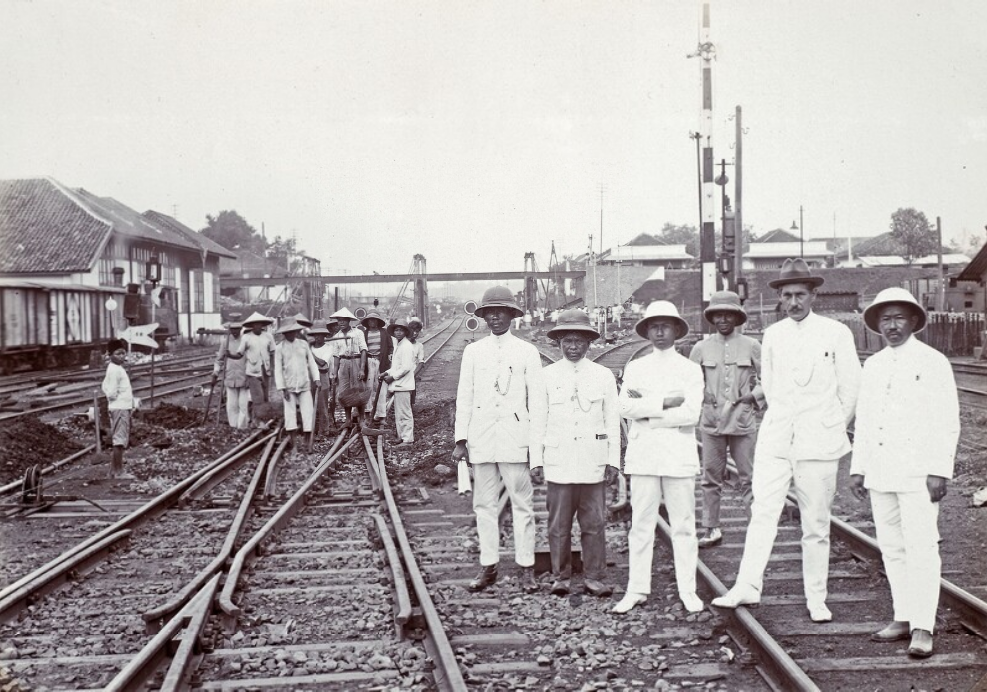
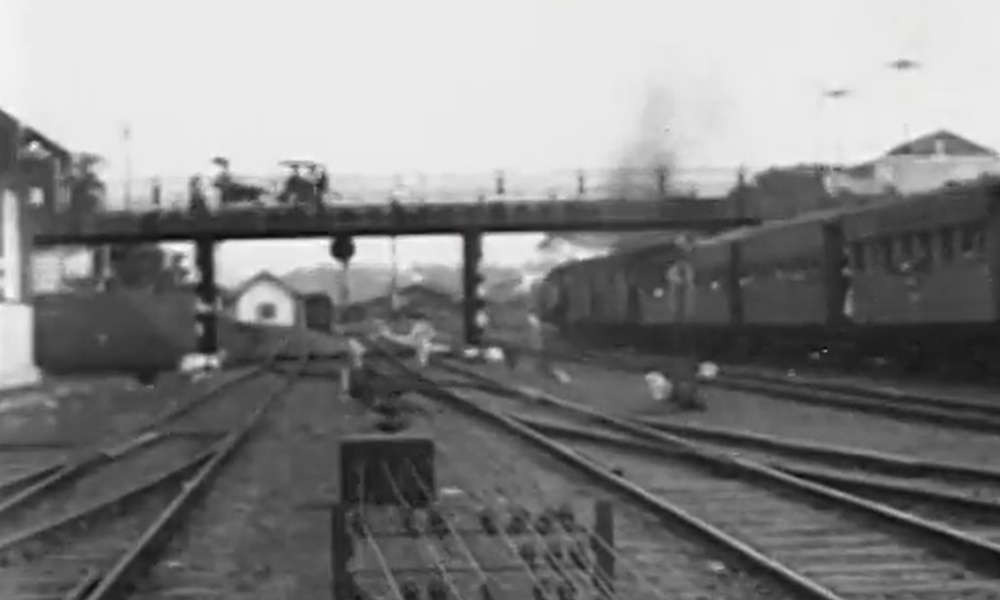
To the west of Bandung Station, a bridge spans the railway line. This approximately 50-meter-long bridge connects the south and north sides of Pasirkaliki Street. It became a crucial element in Bandung’s modern urban planning. The bridge’s existence was closely linked to the railway network improvement project in Bandung in the 1920s.
At that time, officials reorganized the railway system in the capital of the Priangan Residency to keep up with the city’s rapid development. Bandung was even under consideration as a potential capital of the Dutch East Indies, replacing Batavia. This ambitious idea drove a wave of development and infrastructure expansion, especially in the transportation sector. Engineers upgraded railway lines and facilities to streamline the movement of passengers and goods and to reduce congestion at rail–road intersections.
The construction of the viaduct provided a solution to avoid the direct intersection of rail and road. On Pasirkaliki Street, a bridge stretched over the railway tracks. Over time, this structure came to be known as the first viaduct ever built in Bandung.
Pasirkaliki Road connects Kebonjati Road in the south with the intersection of Nieuwekerkhofweg Road (now Pajajaran Street) near the Pasirkaliki area in the north. This road intersects the railroad tracks near Bandung Station. Several accidents have occurred at this intersection. One such accident occurred on a Friday night in October 1919. A horse-drawn carriage carrying three European passengers was hit by a train coming from Cimahi and thrown 10 meters, then plunged into the river. Although the carriage was destroyed, all passengers, the driver, and the horses survived[1].
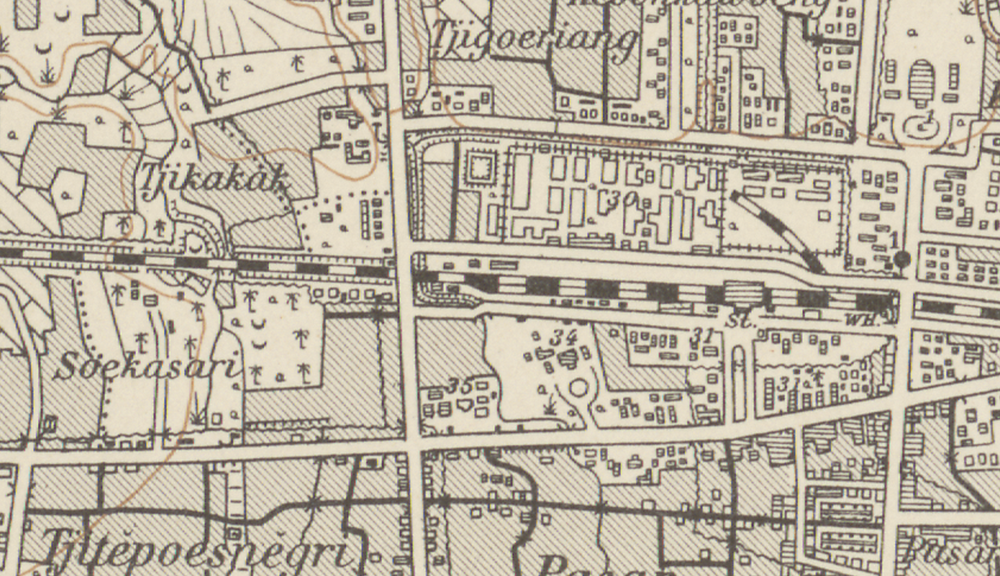
Improvements around the railroad crossing on Pasirkaliki Street have been underway for a long time. In 1902, a new road was built to connect Pasirkaliki Street with Bandung Station. This road was very beneficial because it reduced the volume of vehicles using the main road at Marschalklaan (now the Hall Station terminal). Vehicles carrying passengers and goods from the west began using this new street[2].
The public complains about the condition of the road and the area around the intersection. In 1920, the Preangerbode newspaper highlighted public complaints about a man frequently bathing naked in the river near the railroad crossing[3].
In 1922, someone wrote about the condition of the road at the railroad crossing. He wrote that the road conditions at the Pasirkaliki crossing were extremely dangerous. This condition required caution, and vehicles were restricted to 10 km/h[4].
As noted above, several issues drove the upgrade of the railway line in Bandung, including the need to ensure the smooth flow of passenger and freight traffic and to reduce congestion at crossing areas. Engineers discussed multiple plans, and these efforts ultimately produced several major legacies: the double-tracking of the line between Padalarang and Kiaracondong Stations, the construction of Bandung Gudang Station, the development of a carriage-maintenance emplacement in Ciroyom, and the construction of a viaduct on Pasirkaliki Street.
Because trains frequently passed between Bandung Station and Padalarang Station, the city decided to build the Pasirkaliki Viaduct. The bridge solved the chronic traffic issues on the western side of the station.
According to the article “Het Bandoengsche Spoorwegvraagstuk II” published in the Preangbode newspaper in 1920, 16 trains traveled back and forth across the Pasirkaliki Road crossing between 7 a.m. and 5 p.m[5]. This volume was certain to increase following plans to build an emplacement, Gudang Station, and electrify the railway line in Bandung.
The construction of the Pasirkaliki Viaduct was a masterpiece in itself. The first challenge was the elevation difference between the new and old railway lines—less than 1,5 meters. As a result, workers had to dig the Cikakak River channel slightly deeper and divert its flow. This was necessary because the bridge had to be built over the old river channel[6].
Another challenge was ensuring that the construction did not disrupt train traffic or river flow. A number of technical tasks on the sides of the tracks, such as the construction of retaining walls and small bridges, were completed quickly. However, when the work reached the base of the main track, difficulties began to arise. To tunnel beneath the tracks, workers had to dig down to 5 meters. This work was impossible during the day, as trains still had to pass through as usual. To overcome this, engineers built a temporary bridge to allow trains to pass during the day[7].
The construction of the Pasirkaliki Bridge seemed like a race against time. The project had to be completed before the rainy season arrived. This was because the Pasirkaliki road was still a dirt road and had not been paved in August 1924. Since bridge construction began, the section of road that served as the bridge was unusable for half a year. If rain had come, the road would likely have been unusable again[8].
Today, more than a century after its construction, the Pasirkaliki Viaduct still stands strong in the heart of Bandung. This bridge is not only a silent witness to the city’s modernization in the early 20th century, but also a symbol of the resilience of colonial engineering that still exists. Amidst the heavy traffic and surrounding buildings, the viaduct evokes a unique memory, a harmonious blend of historical heritage and the contemporary face of Bandung.
References:
[1] Sneltrein en Deeleman. De Preangerbode. Edisi 4 Oktober 1919.
[2] Nederlandsch-Indië. De Preanger-bode. Edisi 14 Februari 1902.
[3] Klachtenboek. De Preangerbode. Edisi 24 Januari 1920
[4] ROND HET STATION. De Preanger-bode. Edisi 24 Agustus 1922.
[5] Het Bandoengsche Spoorwegvraagstuk II. De Preangerbode. Edisi 28 Juli 1920.
[6] Spoorverdubbeling Tjimindi— Bandoeng—Kiaratjondong. AID De Preanger-bode. Edisi 15 Juli 1924.
[7] Spoorverdubbeling Tjimindi— Bandoeng—Kiaratjondong. AID De Preanger-bode. Edisi 15 Juli 1924.
[8] Het viaduct. AID De Preangerbode. Edisi 14 Agustus 1924.

Leave a Reply