

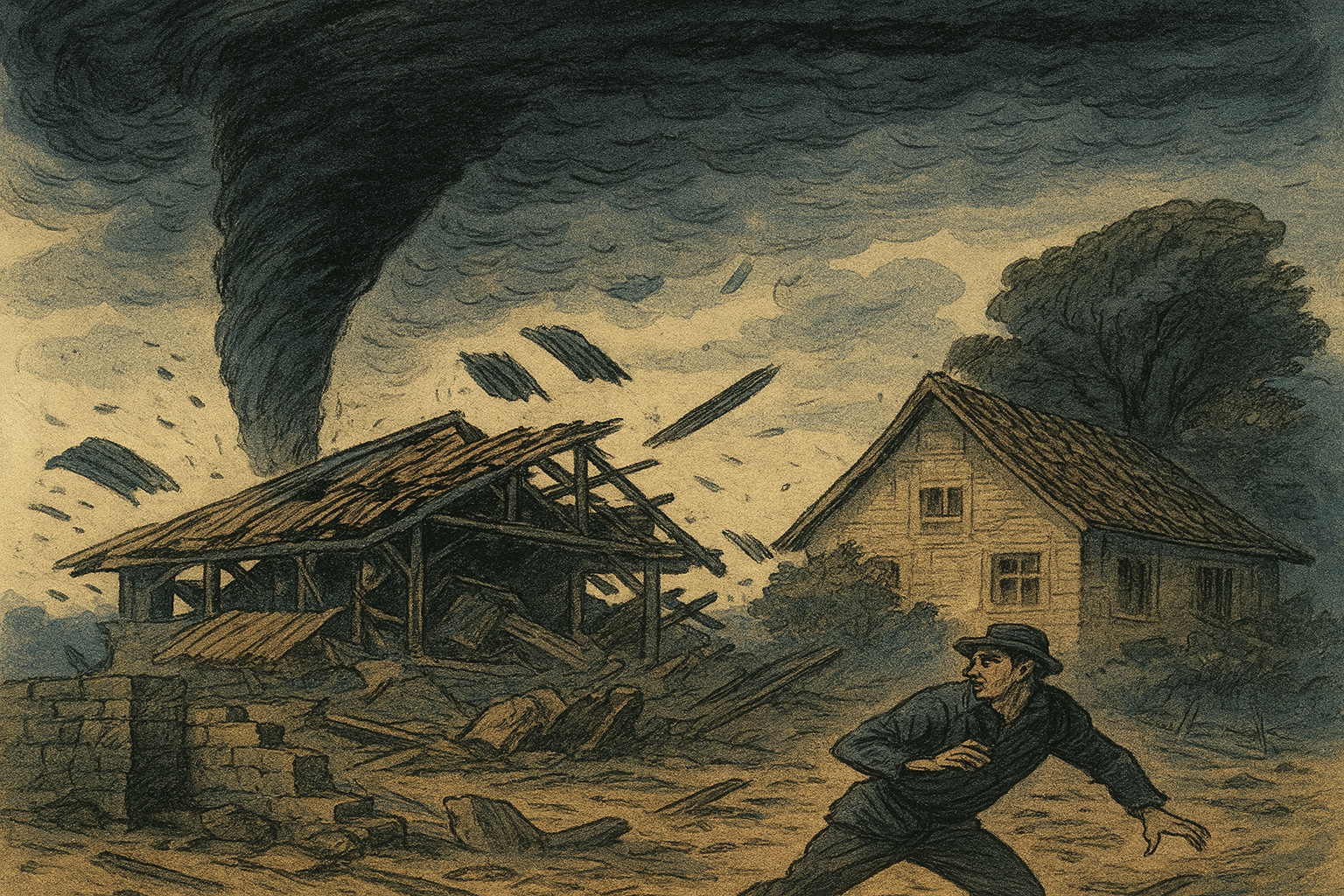
A tornado struck Ciumbuleuit, about four paal (about 6 km) from Bandung city center, on 26 February 1913 at around four o’clock in the afternoon. According to the first report in the newspaper De Preangerbode, the tornado destroyed part of the nearby tea factory building and the administrator’s house[1].
The Ciumbuleuit plantation was located in the northern part of Bandung. Its management was overseen by a plantation company based in The Hague, which continued the plantation enterprises left by W. A. Baron Baud. At the time of the incident, the plantation was led by H. C. Soeters Jr, who served as the estate’s administrator or director. In 1912, Ciumbuleuit produced approximately 230,000.5 kilograms of tea[2].
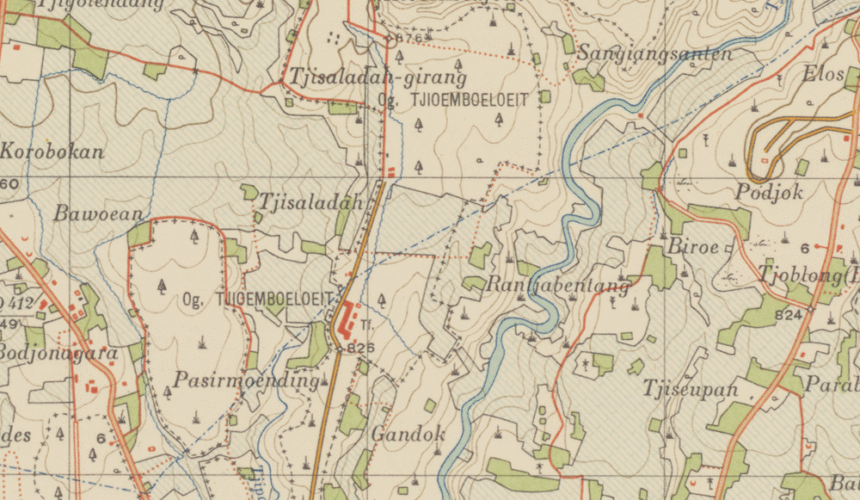
De Preangerbode noted the storm affected only Ciumbuleuit and Gegerkalong, leaving the rest of Bandung untouched. The wind approached from the west of Gegerkalong, the northwestern area of Ciumbuleuit, destroying around 40 to 50 houses.
Read Also: A MAJOR STORM SWEPT THROUGH BANDUNG, 1922
Before reaching the factory, the tornado toppled a two-meter-high stone fence. It then tore through the tea factory, ripping apart parts of the building. Sections of the zinc roofing were blown tens of meters into the air. From a distance, the tornado appeared as a dark vertical column. The sheets of zinc drifted through the air like thin, torn pieces of newspaper[3].
A worker named Bos witnessed the terrifying event. He was inside the factory when the storm struck. Within moments, everything above him was torn apart. Beams, frames, and the roof collapsed near him. Despite the destruction, he managed to survive[4].
In this incident, the sorting warehouse and the engine building survived the storm. However, the transformer house and the corridor running along the factory were destroyed. Losses were estimated at several thousand guilders[5].
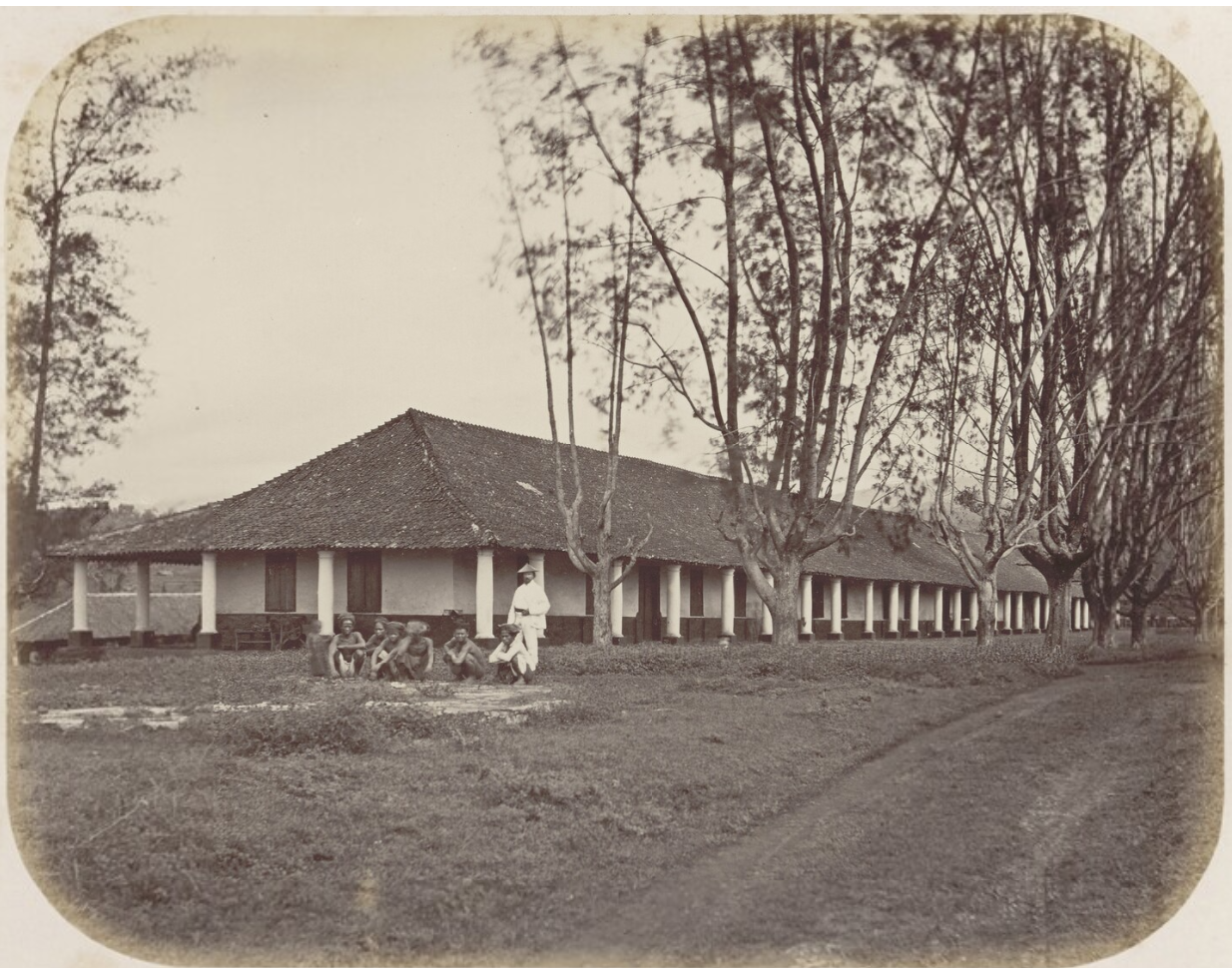
Besides damaging the factory, the tornado also severely damaged the administrator’s house, located 30 meters away. A five-meter wooden beam was lifted and hurled onto the roof of the back room. The ceiling was torn open as the wind blew off the roof tiles. Rain entered the house because the upper structure was exposed. At the time, H. C. Soeters Jr was working inside, while his wife and children were in the rear hallway. All of them survived unharmed[6].
Read Also: STRONG WINDS AT CIPARAY MARKET
Although the house suffered significant damage, Het Nieuws van den Dag voor Nederlandsch-Indië noted that the building was actually fortunate not to have been located directly in the tornado’s core path, which allowed it to remain standing and relatively intact. As a comparison, a strong whirlwind in Bandung had even uprooted a large banyan tree just a few months earlier[7].
Fortunately, the disaster resulted in no fatalities[8].
References:
[1] Wervelstorm. De Preangerbode. Edisi 26 Februari 1913.
[2] Wervelstorm. Bataviaasch Nieuwsblad. Edisi 27 Februari 1913.
[3] Wervelstorm. De Preangerbode. Edisi 27 Februari 1913.
[4] Wervelstorm. De Preangerbode. Edisi 27 Februari 1913.
[5] Een windhoos. Het Nieuws van den Dag voor Nederlandsch-Indië. Edisi 27 Februari 1913.
[6] Wervelstorm. De Preangerbode. Edisi 27 Februari 1913.
[7] Een windhoos. Het Nieuws van den Dag voor Nederlandsch-Indië. Edisi 27 Februari 1913.
[8] Een wervelstorm in het Bandoengsche. Deli Courant. Edisi 28 February 1913.

Leave a Reply