

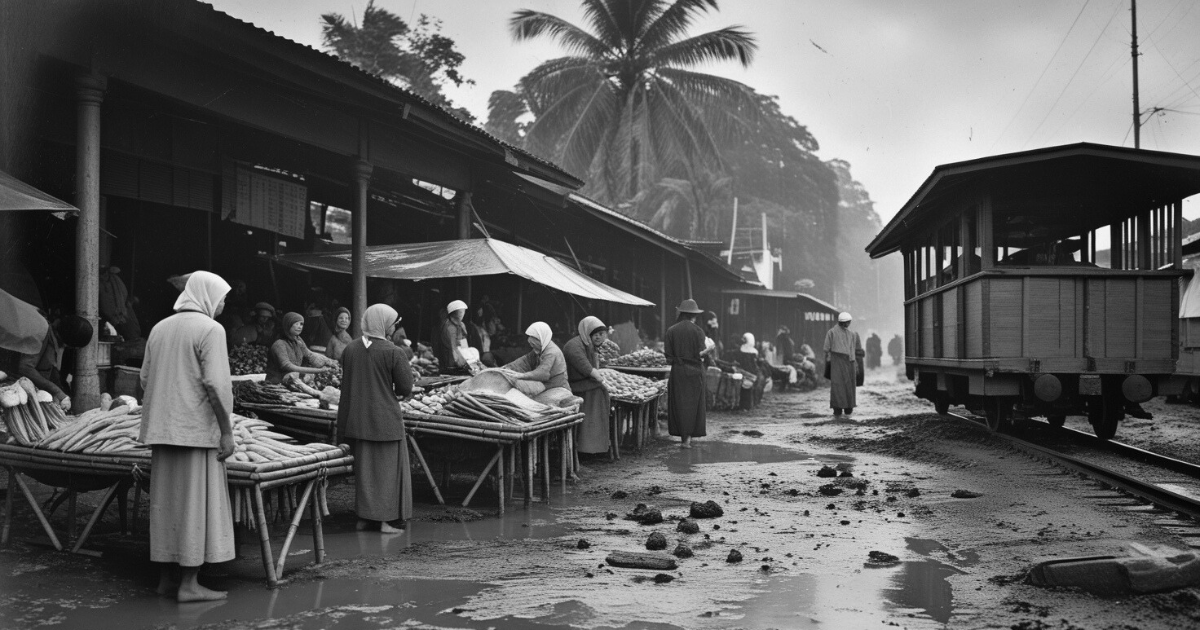
Ciparay is a district in Bandung Regency. Geographically, it is located in the southern part, close to the districts of Majalaya and Cicalengka. As the district’s city center, Ciparay is traversed by a highway connecting Majalaya and Banjaran. There is even a T-junction connecting this highway with the roads to Kertasari and Pangalengan.
In addition to being a land traffic hub, Ciparay is also served by a railway line. The city has a train station on the route between Dayeuhkolot and Majalaya, which opened in 1922. This railway line facilitates the movement of passengers and goods in the area.
Read Also: The Second Storm of Bandung, 1922
The construction of the railway through Ciparay is driven by the significant economic potential of prosperous areas like Majalaya and Ciparay[1]. In addition to its significant markets, the eastern part of the Citarum River was home to several agricultural centers[2].
Furthermore, rail transport will be relied upon to transport produce from plantations in the surrounding highlands and eastern Pangalengan[3]. Ciparay Station is located near the market, the center of economic activity for the local community.
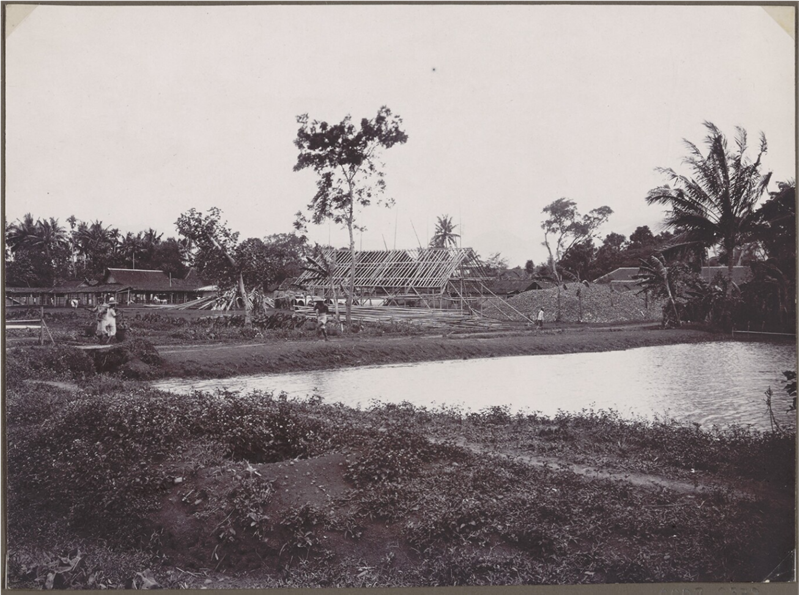
Several years after the railway line was built, the Ciparay market was devastated by a strong wind, towards the end of 1938. In November 1938, a strong wind struck the Ciparay market. The wind moved from the northwest to the southeast, uprooting trees and destroying houses[4].
The wind’s fury destroyed nine market stalls. It had been used as a shelter by some people. Tragically, fourteen people were injured while trying to escape the wind’s fury[5]. Three of them were seriously injured and unable to walk[6].
The strong wind in Ciparay was accompanied by heavy rain and flashes of lightning[7]. Not far from the wind, two farmers were killed by lightning while they were working in their rice fields[8].
This incident was one of the most significant events of that time. Five years earlier, a strong wind had struck the Rancaekek area, which is about 9 km north of Ciparay. This wind damaged and destroyed dozens of houses and caused one fatality.
references:
[1] Mulyana, Agus. 2017. Sejarah Kereta Api di Priangan. Yogyakarta: Ombak. Hal. 180.
[2] De Lijn Dajeuhkolot–Madjalaja. De Preanger-bode. Edisi 18 Februari 1922.
[3] De Lijn Dajeuhkolot–Madjalaja. De Preanger-bode. Edisi 18 Februari 1922.
[4] WERVELSTORM BOVEN TJIPARAJ. Algemeen handelsblad voor Nederlandsch-Indië. Edisi 11 November 1938.
[5] WERVELSTORM BIJ BANDOENG. De Indische courant. Edisi 11 November 1938
[6] WERVELSTORM BOVEN TJIPARAJ. Algemeen handelsblad voor Nederlandsch-Indië. Edisi 11 November 1938.
[7] WERVELSTORM BOVEN TJIPARAJ. Algemeen handelsblad voor Nederlandsch-Indië. Edisi 11 November 1938.
[8] WERVELSTORM BIJ BANDOENG. De Indische courant. Edisi 11 November 1938

Leave a Reply